The Best Fall Road Trips, Week by Week
Autumn is the one season where a road trip has a deadline. The colour moves south and downhill at roughly 100 miles a week, peaks somewhere in a two-week window, and is gone after the first serious wind. Book the wrong fortnight and you get bare branches or green hills: the route was never the problem.
So this guide is organised around timing rather than scenery. First, when the leaves turn where; then the drives that are genuinely better in October than in July; then the practical business of driving in autumn, which is different enough from summer to be worth a section of its own.
Updated 2026-08-09
When the leaves turn, by region
Peak colour is a moving target with two drivers: latitude and altitude. A pass at 4,000 feet can be past peak while the valley twenty minutes below is still green, which is why a single date for a whole state is useless. The table below is the average year: a warm autumn pushes everything a week later, a dry summer pulls it earlier and dulls it.
| Region | Usual peak | What decides it |
|---|---|---|
| Northern Vermont, White Mountains, inland Maine | Last week of September – first week of October | The earliest reliable colour in the east; altitude turns first |
| Southern Vermont, Adirondacks, Catskills, Hudson Valley | First two weeks of October | A week behind the north, and much easier to reach from a city |
| Berkshires, Litchfield Hills, coastal Maine | Second and third weeks of October | The coast lags inland by roughly a week |
| Blue Ridge Parkway, high sections (above 4,000 ft) | First two weeks of October | Altitude, not latitude: the Parkway peaks north to south and top down |
| Great Smoky Mountains, Parkway valleys | Mid to late October | The long tail of the southern Appalachians |
| Bavaria, Austrian Alps, Salzkammergut | Mid-October | Larch turns last and turns gold, well after the beech |
| Tuscany, Umbria | Late October – early November | Vineyards and the olive harvest rather than forest |
An average year. Two things beat any table: a state's own foliage report, published weekly through the season, and the fact that you can chase peak by gaining altitude or driving north.
If your dates are fixed and the forecast says you are early, drive north or up. If you are late, drive south or down to the valleys. Peak is somewhere within an hour's drive for most of October in the eastern US.
New England: the one everyone means
New England earns its reputation, and the reason is density rather than intensity: sugar maples, white villages and lakes at a scale where the good scenery lasts for hours rather than minutes. The classic run is Boston north through the White Mountains to the Maine coast, which is five days at a civilised pace.
The catch is everyone else. The first three weekends of October are the busiest of the year in North Conway, Stowe and Bar Harbor; Columbus Day weekend is the peak of the peak, when rooms cost double and the Kancamagus Highway moves at walking pace. Midweek is a different trip for the same money.
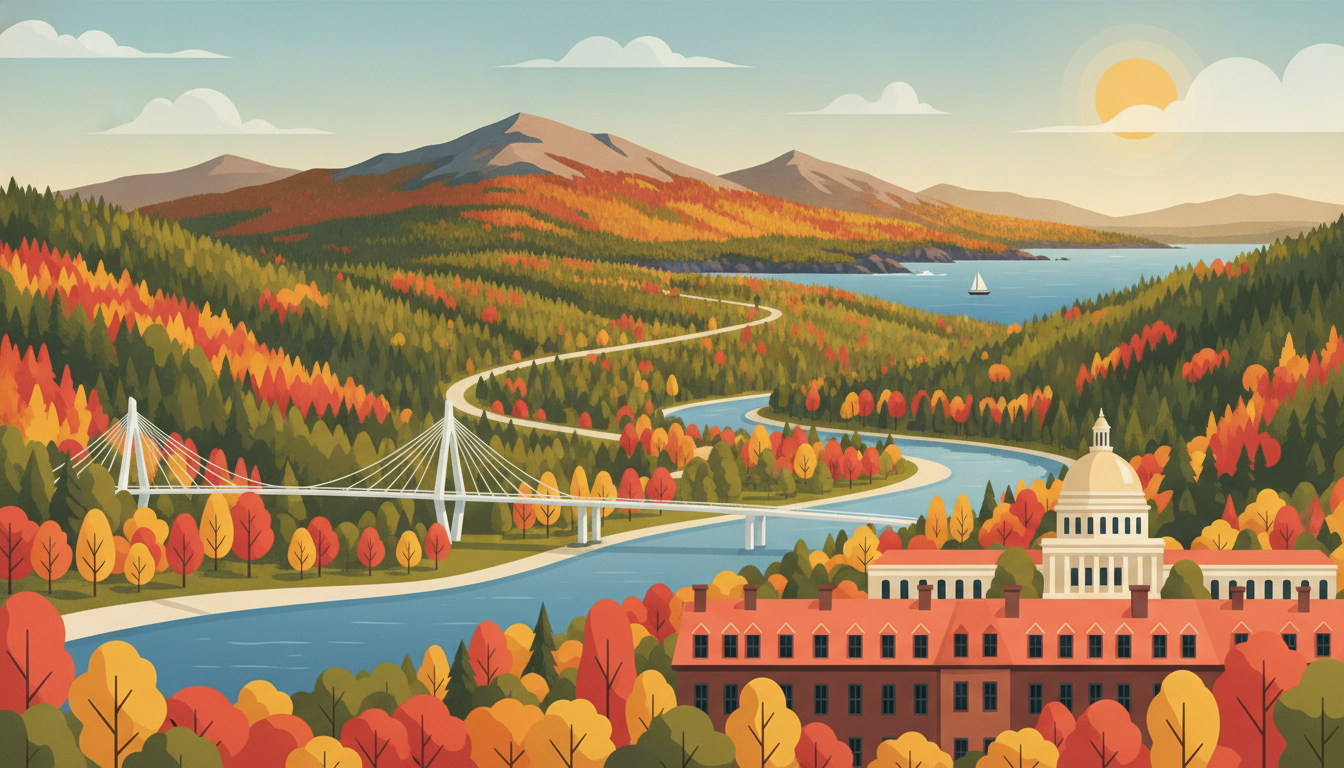
Acadia's Cadillac Mountain summit road requires a vehicle reservation in season, and the sunrise slots go quickly. The rest of the park does not, but that one road is the one everybody wants.
The Blue Ridge Parkway: colour without the crush
The southern Appalachians are the underrated half of American autumn. The Blue Ridge Parkway runs 469 miles at 45 mph with no trucks, no traffic lights and no billboards, and because it climbs and drops constantly, it passes through several weeks of colour in a single day's driving.
- The high sections around Grandfather Mountain and Mount Mitchell peak in the first half of October.
- The valleys and the southern end near Asheville follow a fortnight later: mid to late October is often the better bet.
- There is no fuel on the Parkway itself. Fill up when you drop off for lunch, not when the gauge asks.
- Fog at altitude is common and turns an overlook into a wall of white; clear mornings are the time to gain height.
A day, not a week: autumn out of a city
Most people cannot take a week off in October, and the good news is that the best fall driving in the eastern US is within two hours of a major city. A day trip also solves the accommodation problem entirely, which in peak season is most of the problem.
Out of Boston, the White Mountains are the classic and the Berkshires the quieter alternative; Salem in October is either the point or the thing to avoid, depending on your tolerance for crowds. Out of New York, the Hudson Valley and the Catskills turn a fortnight after northern New England, which extends the season by two useful weeks.
Leave early. Autumn traffic on a two-lane scenic road is worse than city traffic, because there is nowhere to overtake and everyone is stopping for the same photograph.
Autumn in Europe: later, quieter, warmer
European autumn runs behind the American one and rewards a different instinct. The Alps turn in mid-October, and the larch: which goes gold rather than red and drops its needles, is the reason the Bavarian and Austrian valleys look the way they do in photographs.
Further south, autumn is about harvest rather than colour. Tuscany in late October has the vendemmia behind it and the olive picking underway, warm days, cool evenings and none of the August traffic. The Romantic Road through Bavaria is at its best in the same fortnight, with the added advantage that the castles are no longer queued around the block.
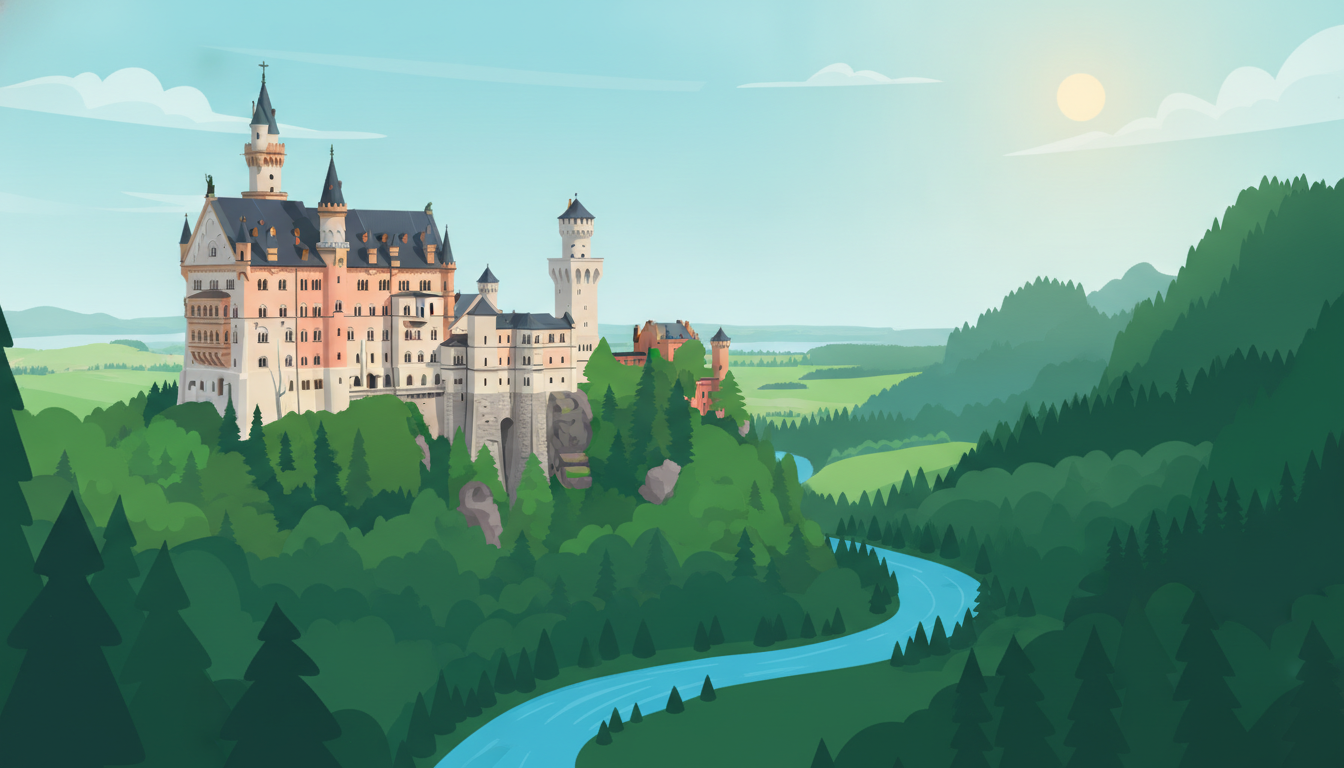
Germany Road Trip: 6 Days on the Romantic Road
Half-timbered towns, hilltop castles and Bavarian backroads.
6 days · 729 km
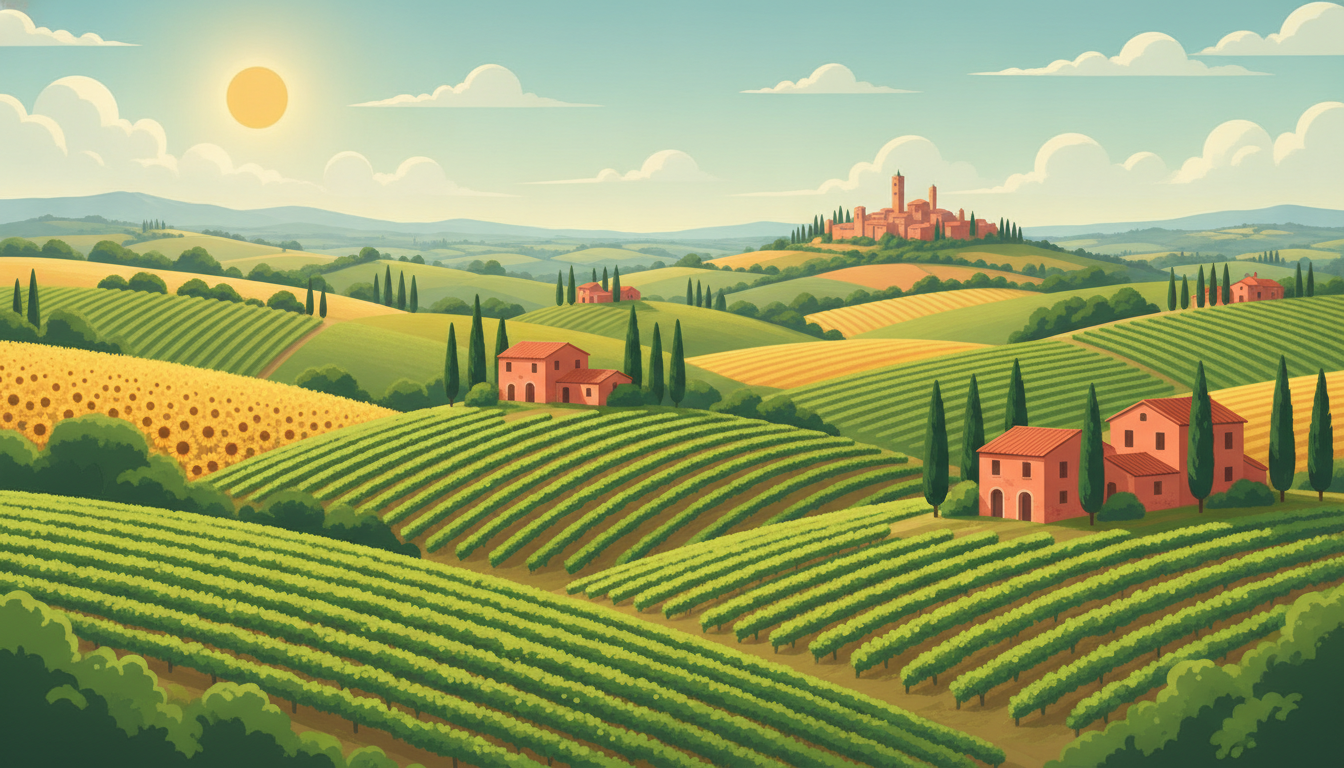
Tuscany Road Trip: 6 Days of Hill Towns from Florence
Vineyard ridges, walled towns and long lunches.
6 days · 576 km
High Alpine passes start closing with the first serious snow, usually from late October: the Grossglockner and the Timmelsjoch among them. Check the pass, not the weather forecast for the valley.
Driving in autumn is not driving in summer
The season changes the driving itself, and the changes are the kind that only matter once. Daylight is the big one: by mid-October the eastern US loses a scenic hour compared with September, and the good light for photographs is also the light you are driving home in.
- Deer are in rut from October to early December and move at dawn and dusk. This is when the great majority of collisions happen, and a deer on a rural road at 55 mph is a serious accident.
- Wet leaves on tarmac are as slippery as ice, especially on painted lines and in shaded bends where they never dry.
- Sun angle: low autumn sun on a leaf-covered road is genuinely blinding in the hour after dawn and before sunset. Clean the inside of the windscreen before you go: it is the difference between glare and no glare.
- Mountain roads can be twenty degrees colder at the top than at the bottom, and the first frost of the year usually arrives without any announcement.
- Many seasonal roads, visitor centres and small-town restaurants close for the year in late October, not in November. Check before relying on one for dinner.
After the leaves: where to drive in winter
Once the colour has gone, the good driving moves south. The Florida Keys are in their dry season from December, warm and clear when the rest of the country is not, and correspondingly at their most expensive over Christmas and New Year. Arizona is the other answer: Sedona and the Grand Canyon's South Rim stay open all winter, with cold clear air and a fraction of the summer crowds.
Both are better in winter than in summer, which is unusual and worth knowing: the Keys are humid and storm-prone in August, and the Arizona desert routinely passes 43 °C. The trips that fill the gap between the leaves and spring are not consolation prizes.


Questions, answered
- When is the best time for a fall road trip?
- Late September for northern New England and the White Mountains, the first two weeks of October for the Catskills, Hudson Valley and the high Blue Ridge, and mid to late October for the Berkshires, coastal Maine and the Smokies. In Europe, mid-October for the Alps and late October into November for Tuscany.
- Where are the best fall road trips in the US?
- New England from Boston to Acadia is the classic and deserves it. The Blue Ridge Parkway is the quieter equal, with the advantage that it passes through several weeks of colour in a day because it climbs and drops constantly. If you only have a day, the Hudson Valley from New York and the White Mountains from Boston are both within two hours.
- How far ahead should I book a fall trip?
- Months, for the first three weekends of October in New England. Columbus Day weekend in particular sells out and prices double. Midweek in the same fortnight is usually available a few weeks out and is a considerably better experience on the road.
- What if I have missed peak colour?
- Drive south or drop altitude. Peak moves roughly 100 miles south a week and down the mountains at the same time, so being a week late in Vermont usually means being on time in the Berkshires, and a week late on the Parkway's ridges means on time in the valleys.
- Is it worth driving these routes outside autumn?
- Yes, and they are cheaper and emptier. The Kancamagus is a mountain highway in any month, the Blue Ridge Parkway is at its quietest in May and June with the rhododendron in flower, and Acadia without leaf traffic is a different park. What you lose is the colour, not the road.
Read next
Plan the trip while it's in your head
Five short questions and you get a day-by-day itinerary with real stops and honest drive times. Free to read the whole plan.
Plan my road trip →